Introduction
Paper is at the heart of the book printing process. Choosing the right weight and thickness may seem complex, but understanding a few basics makes it much simpler. From durability and flexibility to cost and overall presentation, the right choice helps your book not only look professional but also feel great in hand. In this guide, we’ll walk through the basics of paper weights and how thickness affects both function and feel. We’ll also discuss standard paper weights and provide insights into how different choices affect real-world use.
Correlation Between Paper Weight and Thickness
Paper weight is directly related to a paper’s thickness. Higher weights indicate thicker sheets, while lower weights refer to thinner, more pliable sheets. The thickness affects the level of transparency you see on the page and how well the paper retains ink.
In the UK, paper weight is measured in grams per square metre (gsm) (e.g. 100 gsm). This number represents the weight of a ream of uncut paper before it’s trimmed. The paper’s fibre density determines how heavy or light it feels. For example, thicker papers are often used for special edition books, while thinner sheets are better for readability and comfort.
How Do You Choose The Right Paper Weight?
Practical Function
The ideal paper weight strikes a balance between thickness, flexibility, and practicality. A photo-heavy art book or children’s book benefits from a sturdy paper weight that resists transparency and supports vibrant colours. However, the inner pages of a novel work best on lighter stock that feels comfortable to hold and easy to flip through.
Budget Considerations
Heavier paper weights primarily increase both material use and delivery charges. If you are planning a large run, selecting a slightly lighter weight may be more cost-effective while still achieving high-quality printing. Lighter weights also reduce overall mailing weight, which is important for distribution-heavy projects like catalogues or reports.
Industry Standards
At Mixam, our Instant Quote Calculator will only display the most suitable options based on your print specifications. It’s also worth noting that a paper’s weight may vary slightly by up to 10gsm, depending on batches and manufacturers, as paper is a natural material.
Paper Weights: Text and Cover
Text paper refers to the content printed on the inner pages, while cover paper is used for the exterior, focusing on outer protection and presentation. Mixam allows you to select both inner and cover weights using the calculator. Simply click the ‘Add Cover (+ 4 Printed Pages)’ option to adjust cover stock separately. Items without a distinct cover that use the same paper weight for both the inside and outside are called self-covers, which can be a cost-effective and practical choice.
What Are Common Paper Weights?
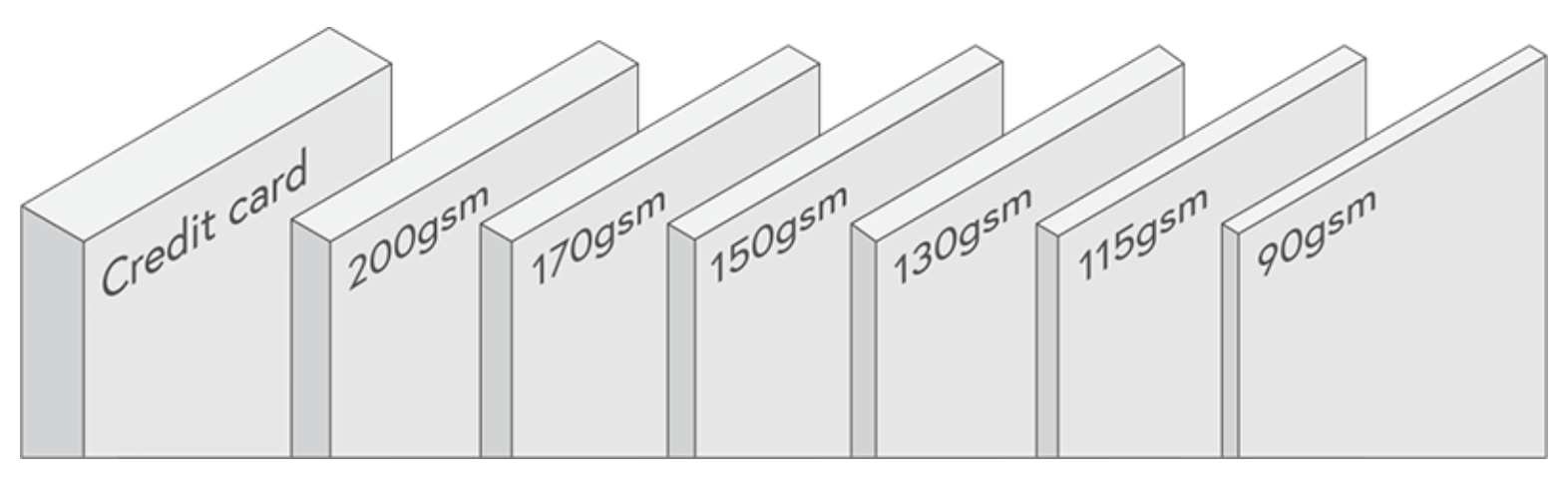
Here are a few guiding principles to simplify your decision-making for inner paper weight:
Light Paper Stocks
Light text papers (e.g., 115gsm or less) are thin, flexible, and commonly used for paperback books, workbooks, or manuals. They keep delivery costs low and are comfortable to read, though they may show some transparency. Light cover stocks start at around 170gsm and provide a firmer feel while remaining relatively lightweight.
Medium Paper Stocks
Medium text papers (120gsm - 200gsm) balance sturdiness and flexibility, making them ideal for items like magazines and catalogues. They have limited transparency without feeling overly heavy. Medium cover papers often range from 200gsm - 250gsm, offering durability while still being easy to fold and bind.
Heavy Paper Stocks
Heavy text papers (above 200gsm) are less common but sometimes used in items like photography books, where thickness is part of the design. Heavy cover papers (250gsm - 300gsm) provide maximum rigidity, durability, and an elegant look for covers. These stocks add spine width and shipping weight, but they’re excellent for books intended as keepsakes.
- Pros of Heavy Paper Weights: High durability; low transparency; higher perceived value; professional look and feel.
- Cons of Heavy Paper Weights: Low flexibility; high shipping costs; more expensive per unit; may increase spine width, making books bulkier to handle.
- Pros of Light Paper Weights: High flexibility; low shipping costs; more sustainable due to less material use.
- Cons of Light Paper Weights: Low durability; high transparency; lower perceived value.
How To Choose The Right Paper Thickness
When narrowing down your options, keep these principles in mind:
- Select heavier weights for books that will be handled frequently.
- Choose lighter weights if cost and mailing efficiency are priorities.
- Use Mixam’s calculator to test different combinations before adding a quote to your cart.
- Remember that a higher weight usually means less flexibility but greater durability.
If you’re unsure about paper weight, consider starting with a smaller test run to assess the paper's feel before proceeding with a full order.
Conclusion
Understanding paper weight and thickness helps you make the right choices for your project. By considering durability, cost, and flexibility, you can find the right balance for your book. Visit Mixam’s product pages to see the range of available paper weights. You can also download Mixam’s free Book Printing Guide to learn how to print a book, and our PrintLink Guide to help you start printing books on demand.
Main Image Credit: Unsplash