Full Bleed Printing
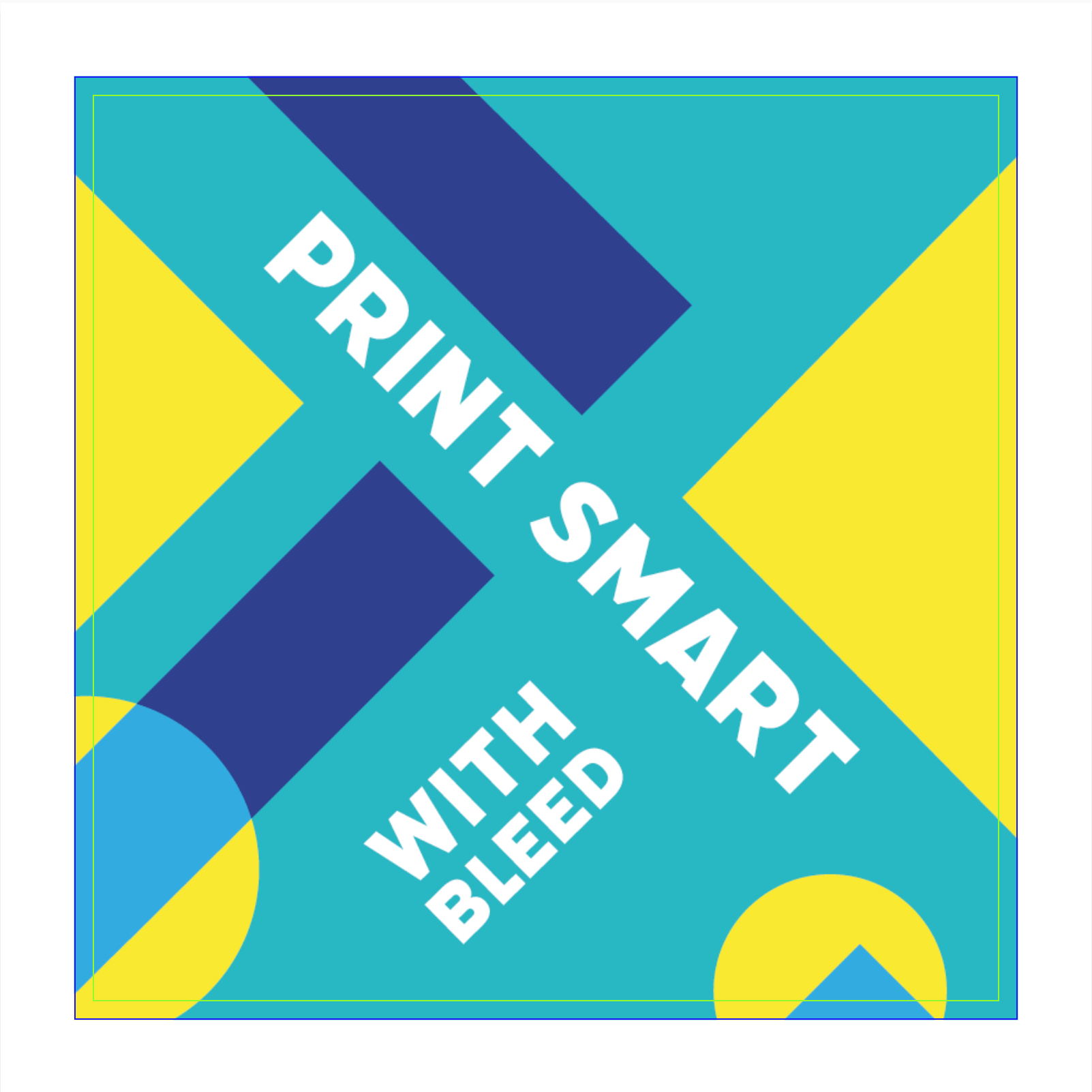
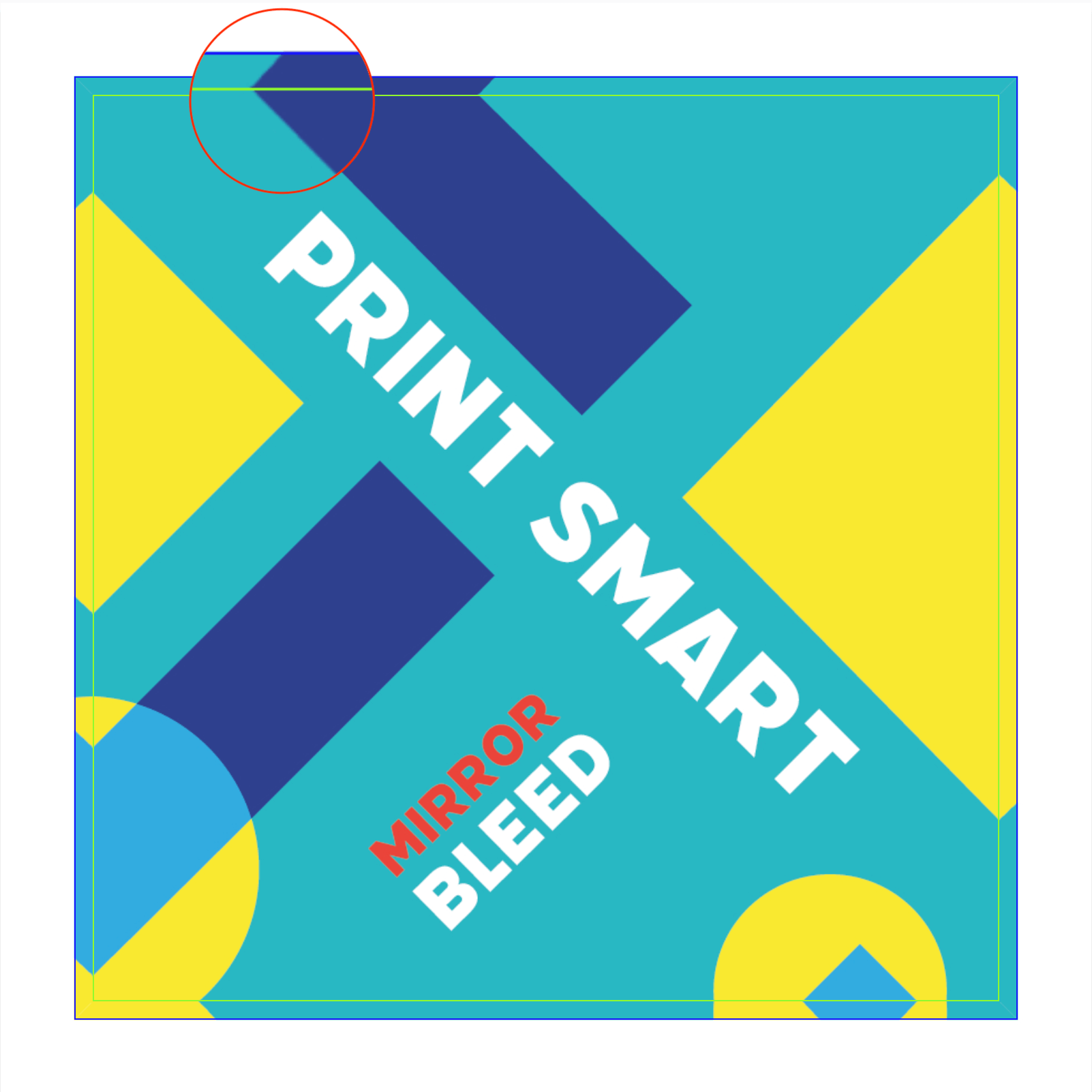
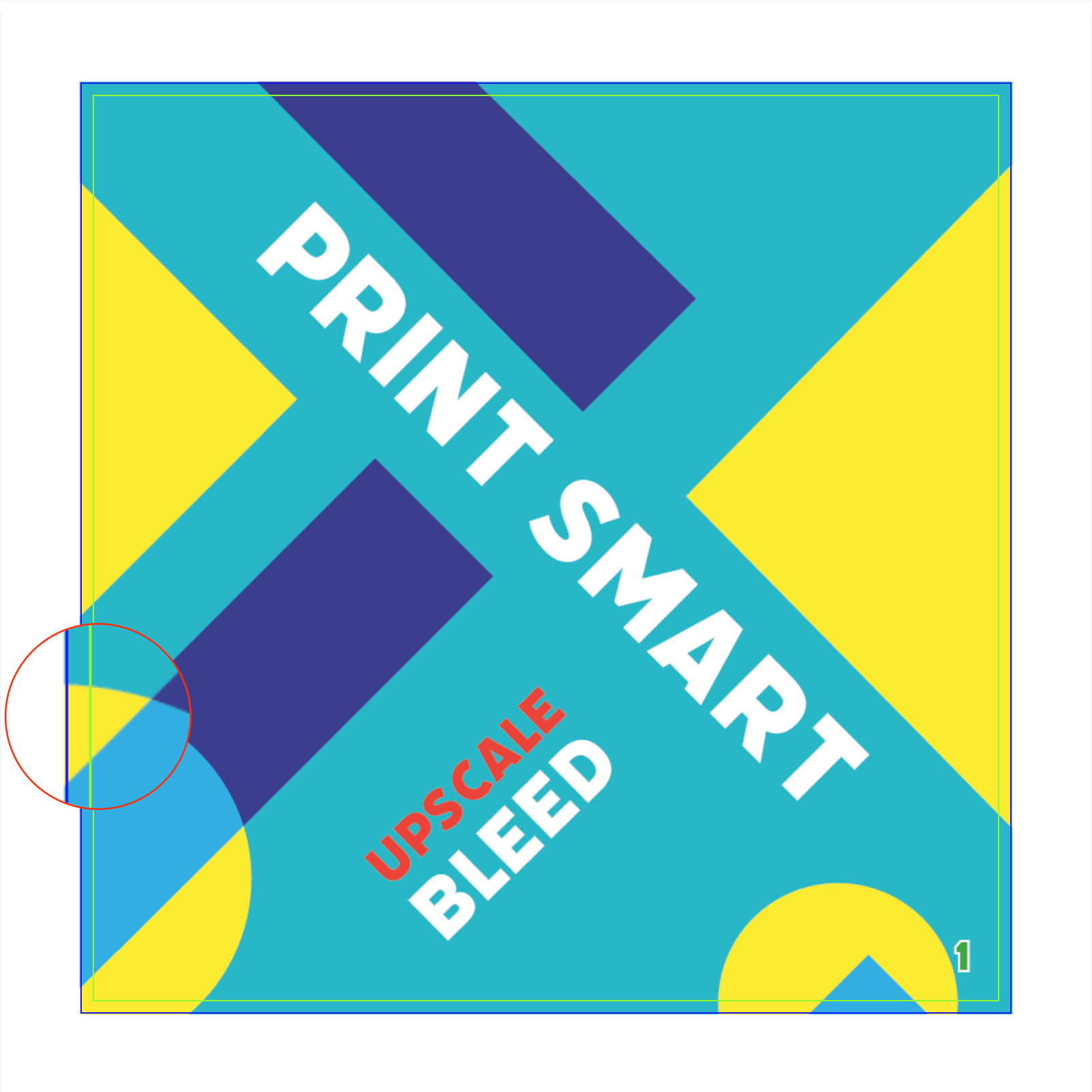
| Full Bleed | False Bleed: Mirror | False Bleed: Upscale | False Bleed: Stretch |
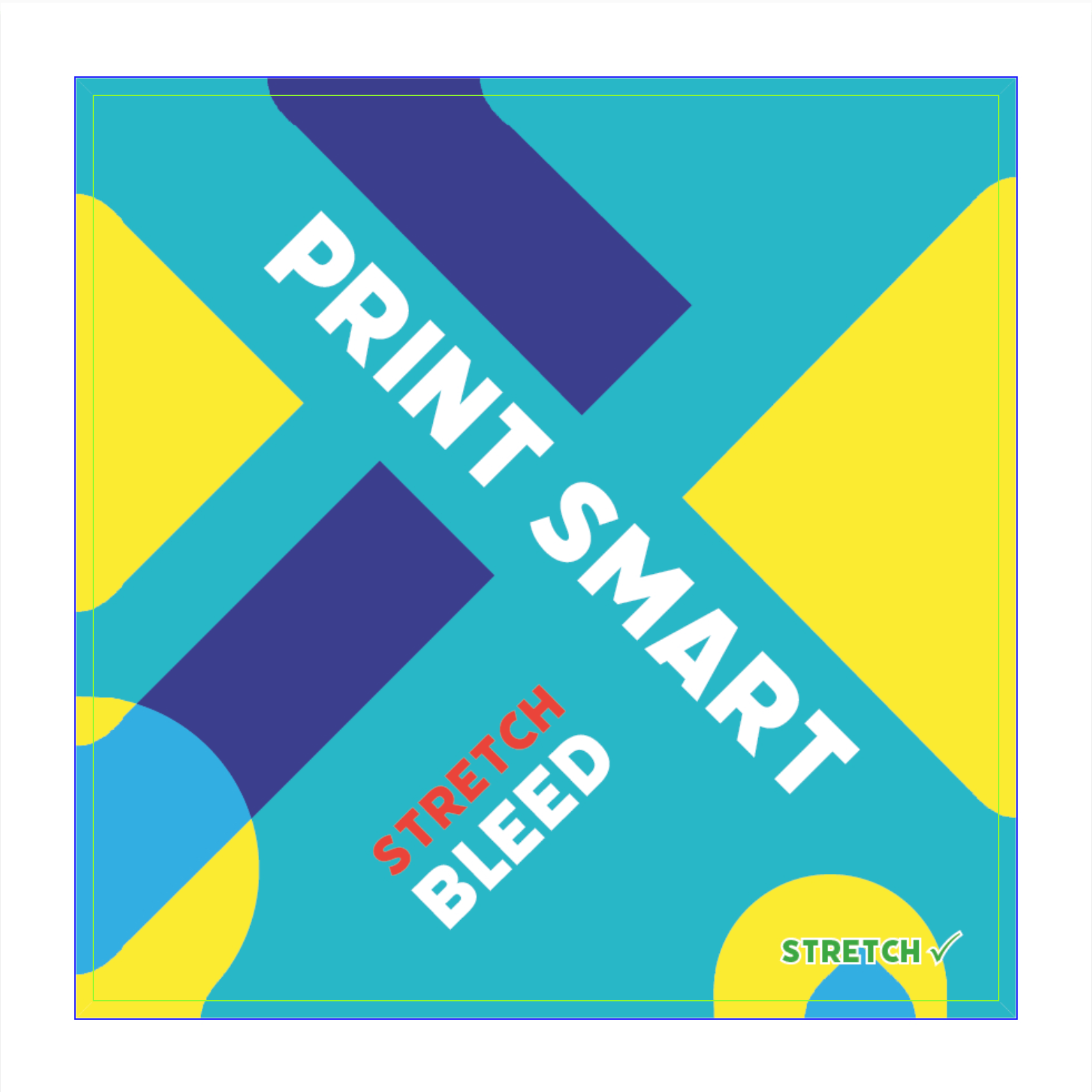
| A printed image or colour that extends 3mm to a page’s edge on all four sides, minimising the paper's natural colour showing when trimmed. | The outer 3mm of your artwork is duplicated and reflected in the bleed area. This bleed suits designs with repeated patterns or simple backgrounds. | An extension of artwork positioned 3mm inside the bleed area, perfect for extending non-critical artwork elements. | Ideal for solid colours or gradients, it replicates the outer 5mm of each page edge and stretches it to the bleed area. |
|
|
|
|
Ensure your print files include bleed before uploading them to your order’s Artwork tab. Mixam’s advanced software will automatically check your files for bleed and notify you of any issues that need correcting. If you need help adding bleed, our team can recommend and apply a false bleed for you. For more information, visit our Bleed support page and watch our Bleed video tutorial below.
Book Printing Terms
| Quiet Area | The space inside the trim line, ensuring key design elements aren’t trimmed or obscured by binding. |
| Safe Zone | The area that ensures your design stays within printing guidelines. |
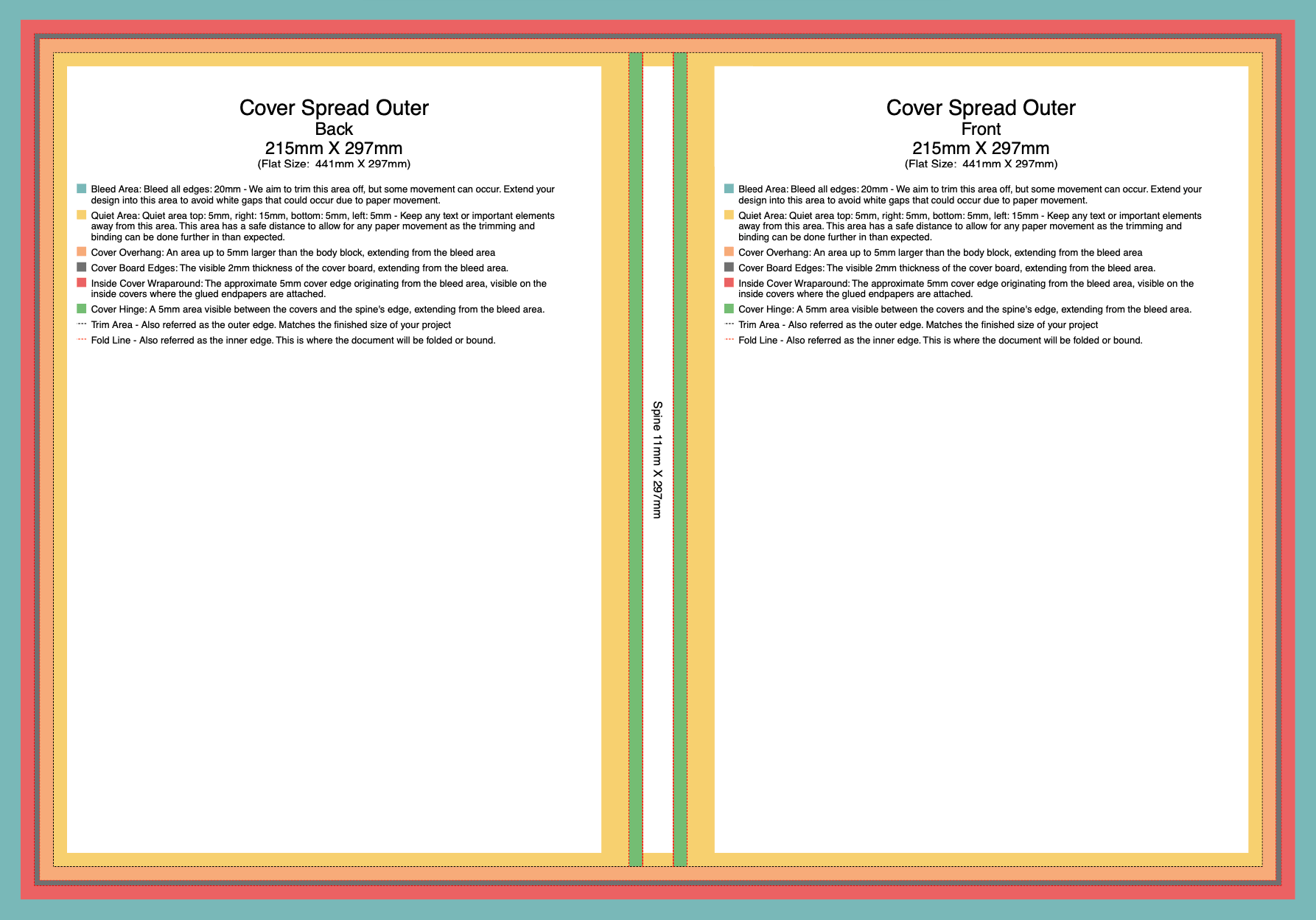
| Spine | The bound edge of a book where the binding holds the pages together. Your spine measurements are visible in your shopping cart and the order’s Details tab. |
| Trim Line | The edge of a page when cut to the finished size. Watch our ‘How To Set A Trim Box’ video tutorial on YouTube for a step-by-step guide. |
| Binding Line | Marks where a book will be bound |
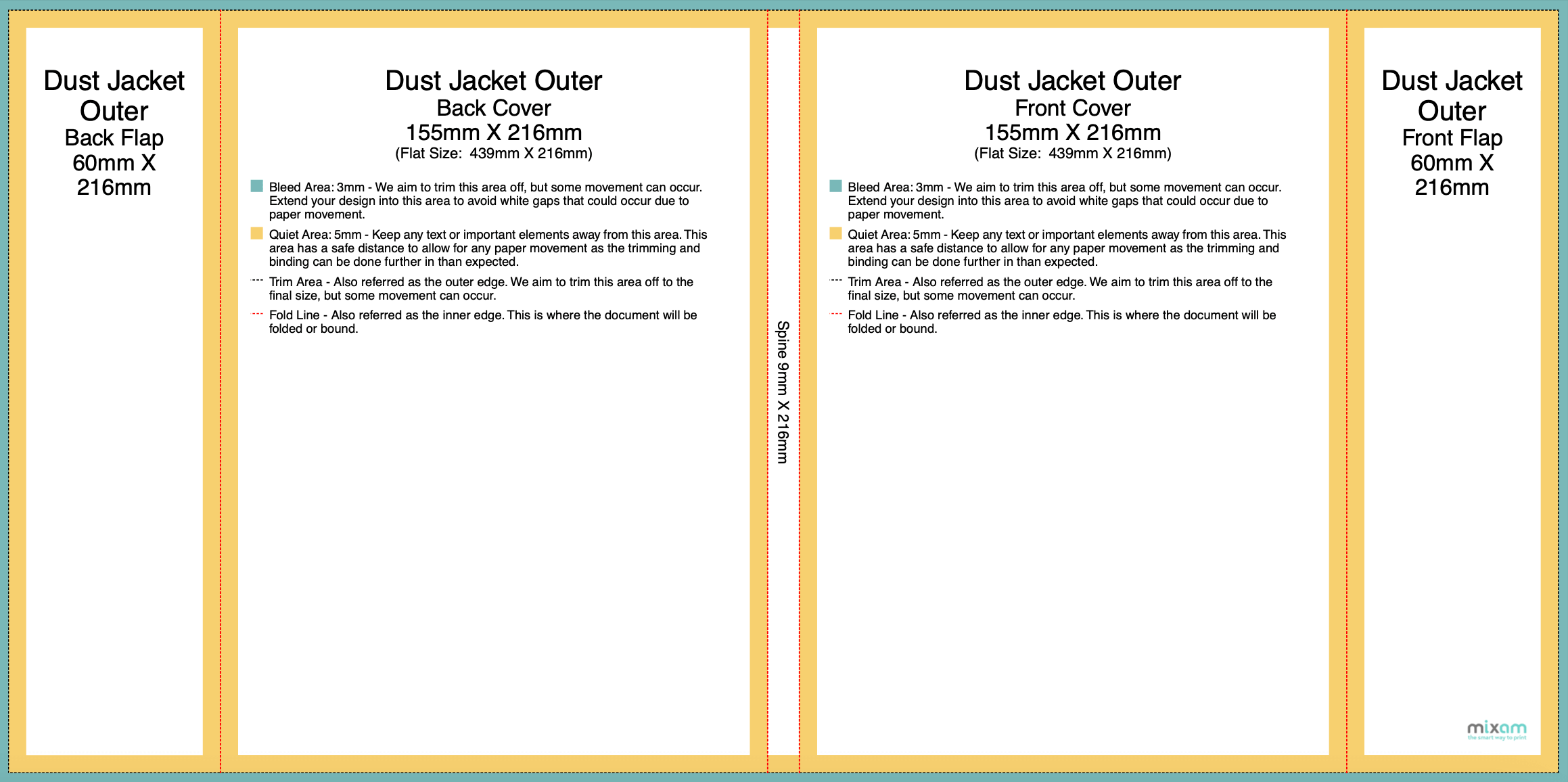
| Hinge Area | The flexible sections on either side of the spine that connect it to the covers on hardcover books. |
What is manufacturing variance?
Manufacturing variance refers to slight differences in alignment, colour, or position caused by machine calibration, paper type, or environmental conditions. We always aim to minimise these variations and ensure prints adhere to acceptable industry standards. Similarly, tolerance movement refers to the allowable shifts or measurement variations during production. It’s important to account for this during the design stage, as it can impact processes like trimming and binding. Mixam adheres to industry standards to ensure these movements are within acceptable limits, providing the highest quality prints.
What is a book block?
The interior pages of a book consist of printed and trimmed paper sheets called signatures, gathered to form a block.

What is a paperback book?
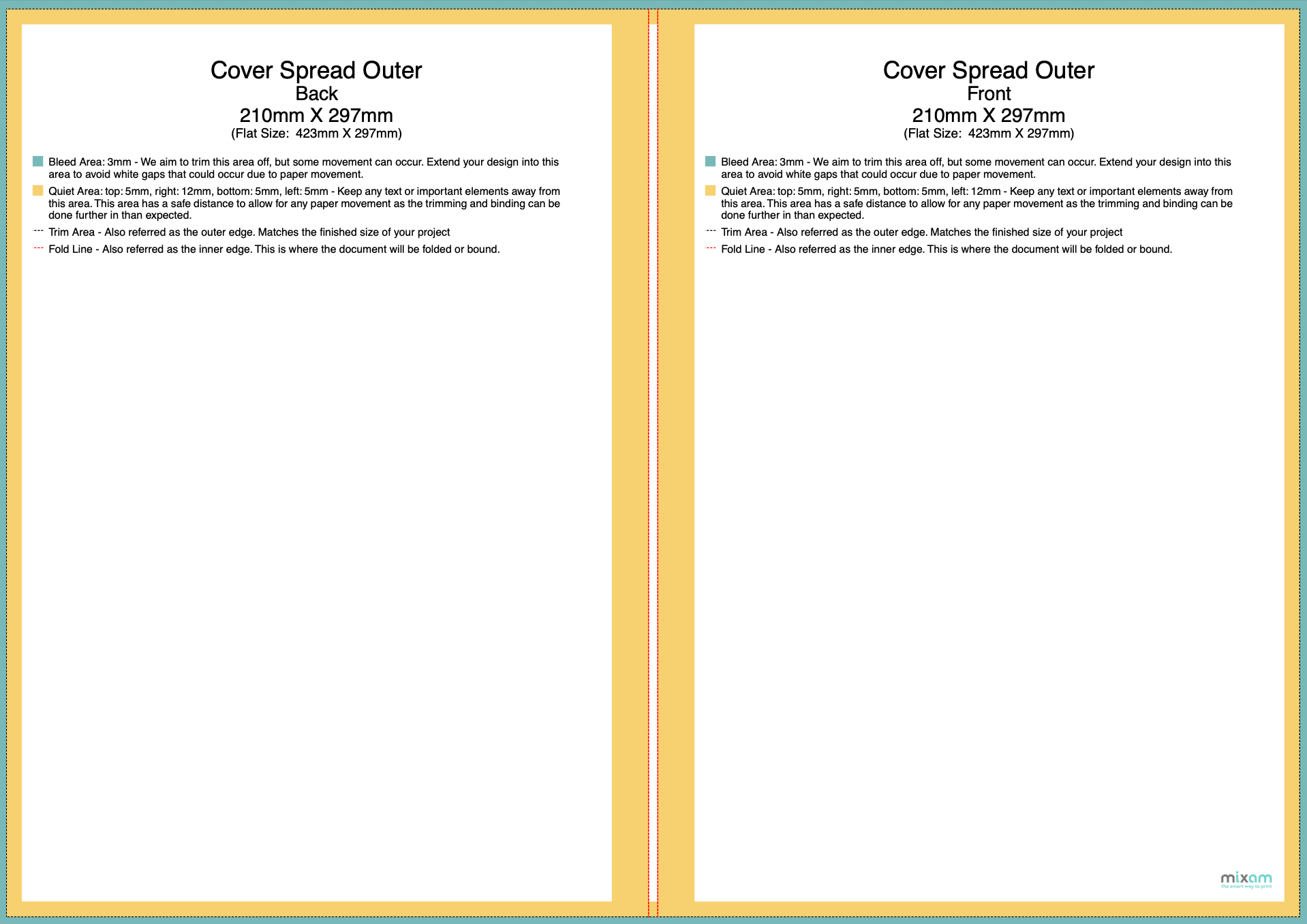
A book in which signatures are bound to the spine with adhesive and covered with slightly heavier covers, creating a rectangular spine using perfect binding. Perfect binding is typical for paperback books, making them affordable and portable.
Paperbacks (softcovers) with high page counts or paper weights use PUR (polyurethane reactive) binding, a strong, long-lasting adhesive so books can open flexibly without spine damage.
Key Features:
- Front Cover: Displays the title, subtitle, author name, and cover design.
- Back Cover: Features a summary, author bio, and optional barcode/ISBN for retail use.
- Gutter Areas: The space near the spine reserved for binding.
- Spine: Includes the title, author name, and publisher logo (if applicable).
- Inner Pages: Contain the book’s content, such as text, images, and illustrations.
What is a hardcover book?
A book in which pages are bound to a spine with adhesive, reinforced with Smyth-sewn binding (optional) and encased in rigid cardboard covers wrapped in printed paper for excellent durability.
A typical hardcover book binds trimmed single pages to the spine, while a Smyth-sewn hardcover stitches folded signatures together with thread, strengthened with gauze, and attaches them to the spine with adhesive, ensuring greater flexibility. Endpapers are automatically included inside the front and back covers to protect the first and last inner pages.
Key Features:
- Endpapers: Attach the book block to the cover and provide a decorative element.
- Head and Tail Bands (optional): Decorative cotton strips added to the top and bottom of the spine for reinforcement and visual appeal.
- Smyth Sewn Binding (optional): A durable binding method where binder thread joins folded signatures, forming a strong and flexible book block
- Dust Jacket (optional): A removable paper cover that offers protection and an additional design element.
- Bookmark Ribbon (optional): A coloured strip of ribbon bound into the binding for readers to mark their progress.
What is a dust jacket?
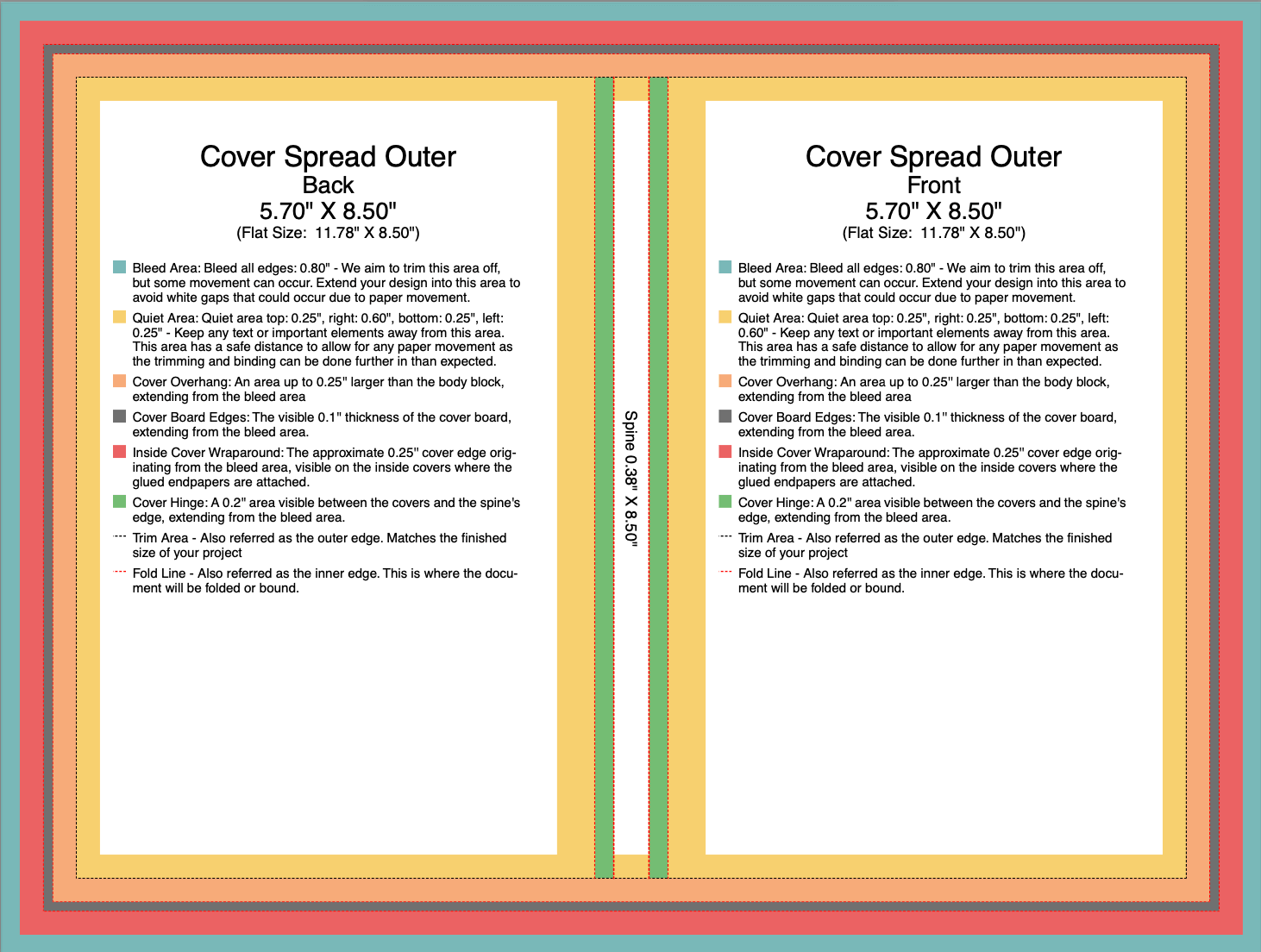
A dust jacket is a lightweight detachable outer cover with folded panels designed to protect a book and enhance its visual appeal. Available for Hardcover Books only.
What is layflat binding?
A hardcover book type for printing seamless double-page spreads without visible binding.
When opened, pages lie completely flat. Single-sided printed sheets are laminated one side, folded in half, glued to the blank side of the next sheet, and assembled into a block before being bound to the spine and covers.
What is staple binding?
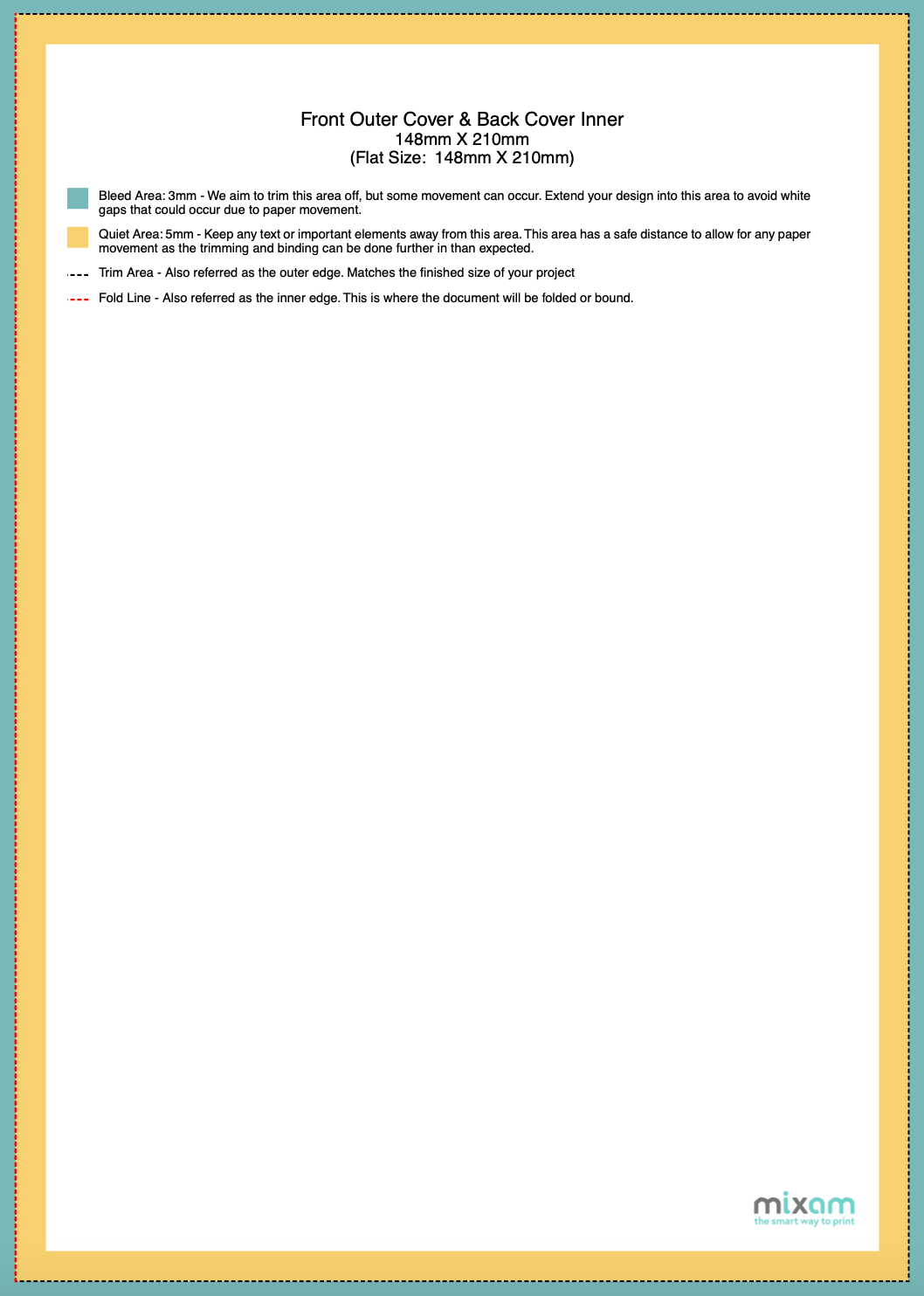
This method secures pages with two staples along the centerfold. It’s perfect for prints with low page counts and designs requiring uninterrupted graphics.
What is wiro binding?
This binding method involves securing trimmed, hole-punched pages with C-shaped wire loops. It’s suitable for both large and small page counts and works best for content where images don’t span across facing pages.
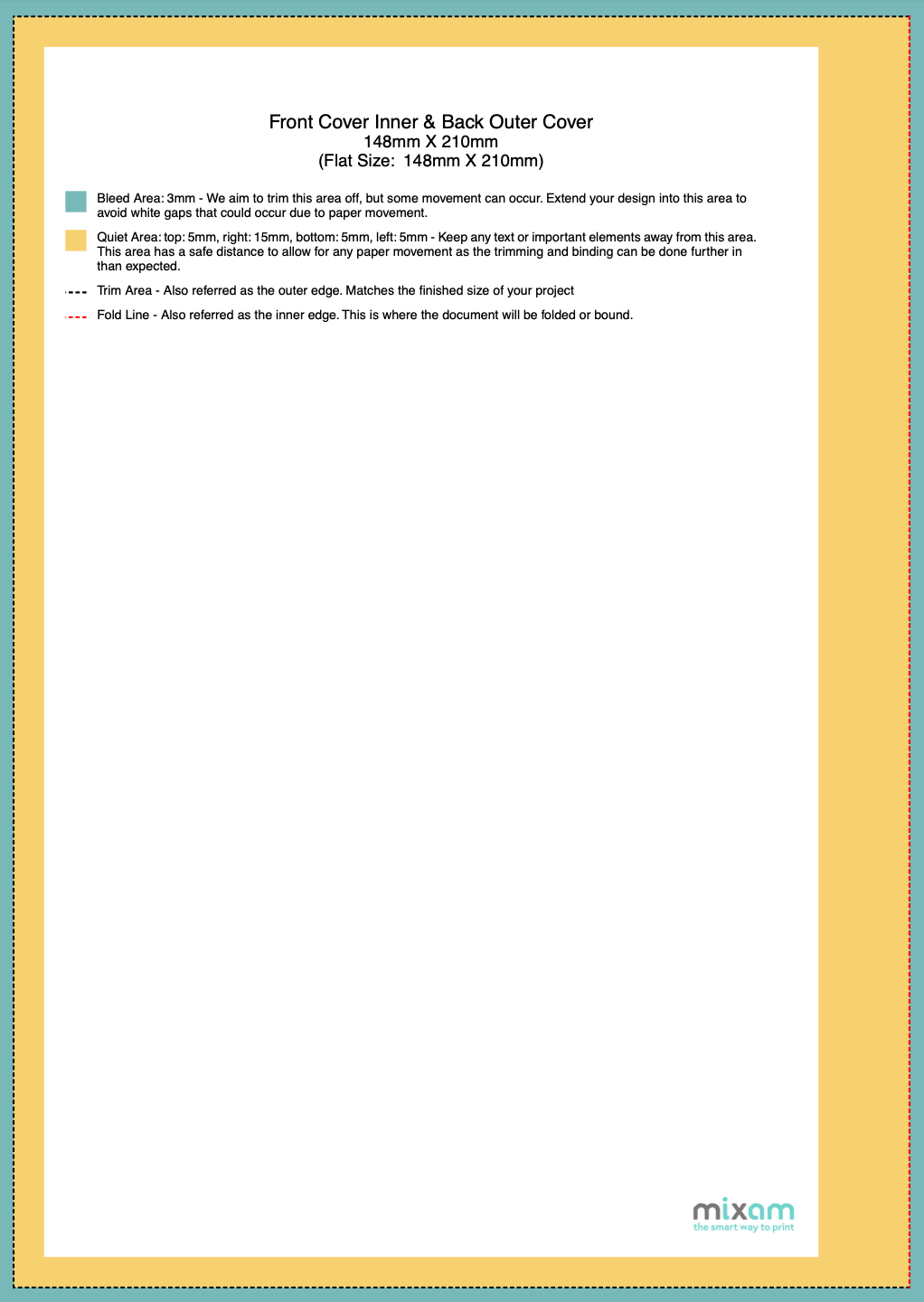
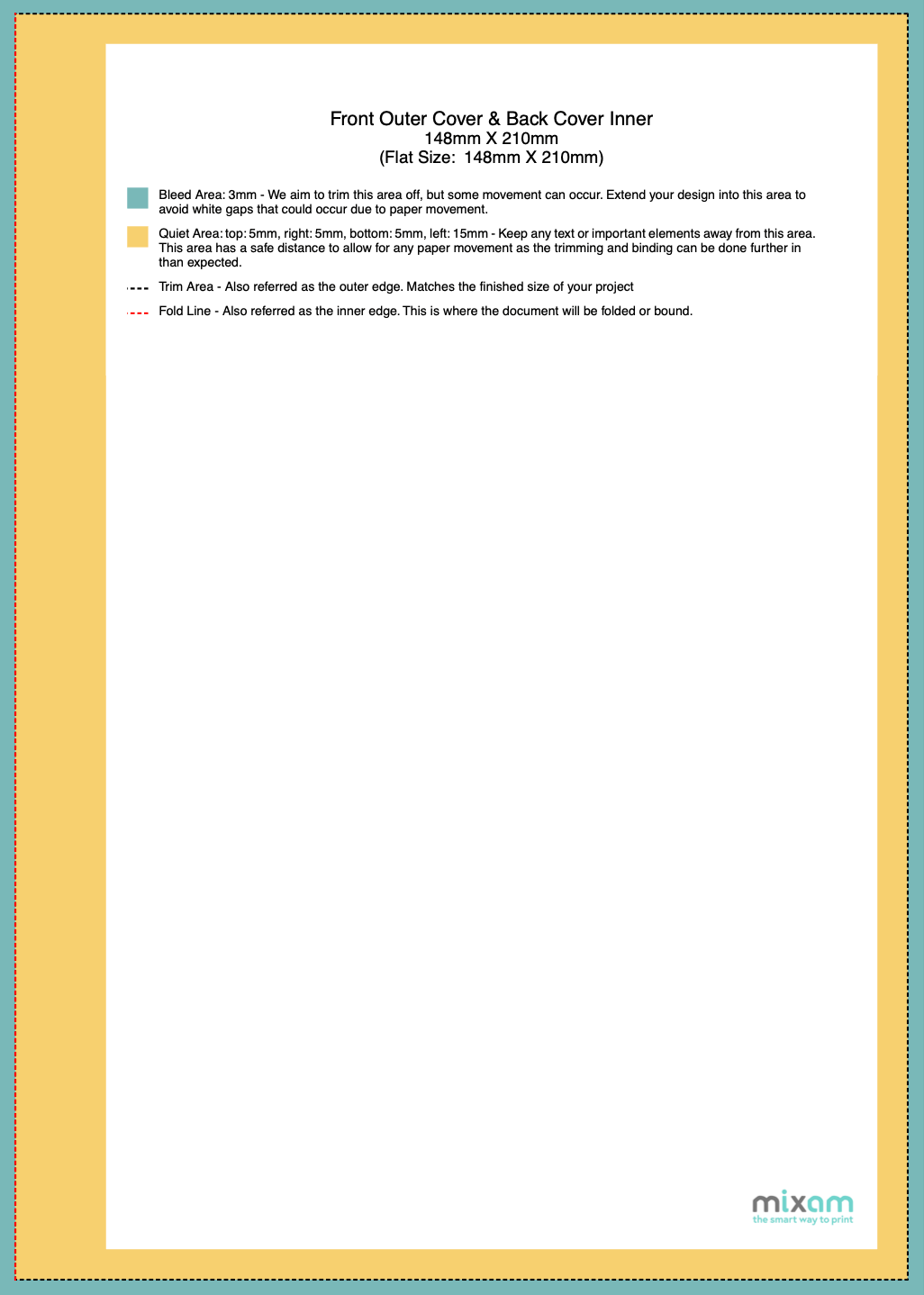
A wire-o binding template with guidelines
Perfect Binding
Inner and Cover Pages
| Area | Measurement |
| Bleed | 3mm |
| Quiet area (binding edge) | 12mm |
| Quiet area (other edges) | 5mm |
Popular Products
Hardcover Binding
Inner Pages
| Area | Measurement |
| Bleed | 3mm |
| Quiet area (binding edge) | 12mm |
| Quiet area (other edges) | 5mm |
Popular Products
Cover Pages
| Area | Measurement |
| Bleed | 20mm |
| Quiet area (binding edge) | 10mm |
| Quiet area (other edges) | 5mm |
Paperback and Hardcover Layflat Binding
Inner Pages
| Area | Measurement |
| Bleed | 3mm |
Paperback Cover Pages
| Area | Measurement |
| Bleed | 3mm |
| Quiet area (binding edge) | 5mm |
Hardcover Cover Pages
| Area | Measurement |
| Bleed | 20mm |
| Quiet area (binding edge) | 12mm |
Popular Products
Staple Binding: Inner and Covers Pages
| Area | Measurement |
| Bleed | 3mm |
| Quiet area (binding edge) | 5mm |
| Quiet area (other edges) | 5mm |
Popular Products
Wiro Binding: Inner and Cover Pages
| Area | Measurement |
| Bleed | 3mm |
| Quiet area (binding edge) | 15mm |
| Quiet area (other edges) | 5mm |
Now that you're familiar with the fundamentals of book printing, you're ready to move on to the Design and File Preparation stage.